
What should real estate investors know before buying a home in Walnut Hill, Bristol, Tennessee?
Walnut Hill offers one of the lowest entry points in the Tri-Cities market, with average home values around $111,900 and proximity to I-81, Bristol Regional Medical Center, and The Pinnacle shopping center, making it a strong candidate for rental income and value-add investment strategies in 2026.
Why Walnut Hill in Bristol Matters for Investors Right Now
If you have been watching Northeast Tennessee for an investment opportunity, Walnut Hill in Bristol deserves your attention this year. The broader Tri-Cities real estate story in 2026 is one of divergence. Johnson City is seeing steady appreciation of around 7.5%, driven by ETSU and the medical corridor. Bristol, by contrast, is remaining relatively flat or seeing very slight dips in pricing, and that is exactly what creates opportunity for investors willing to move strategically.
The market is not crashing. It is normalizing. After years of unsustainable growth, prices are flattening and inventory is rising, which signals a healthy, stabilizing market. For you as a buyer, that means negotiation leverage you did not have two years ago. Inventory has returned close to pre-pandemic levels across the Tri-Cities, and buyers increasingly control the conversation. With 13 years of experience serving Bristol, Johnson City, and the surrounding communities of Northeast Tennessee, I can tell you that conditions like these reward informed investors who know where to look.
What Makes Walnut Hill, Bristol a Value-Buy Opportunity
So why Walnut Hill specifically? Let me walk you through the fundamentals.
Price Point and Entry Cost in Walnut Hill
The average home value in Walnut Hill sits at approximately $111,900. Compare that to the Johnson City median sold price of $344,900 over the last six months, and you are looking at an entry point that is roughly a third of the cost. The Tri-Cities as a whole offers homes that are about 25% to 30% cheaper than comparable properties in Knoxville, and Walnut Hill represents the affordable end even within that already-discounted market.
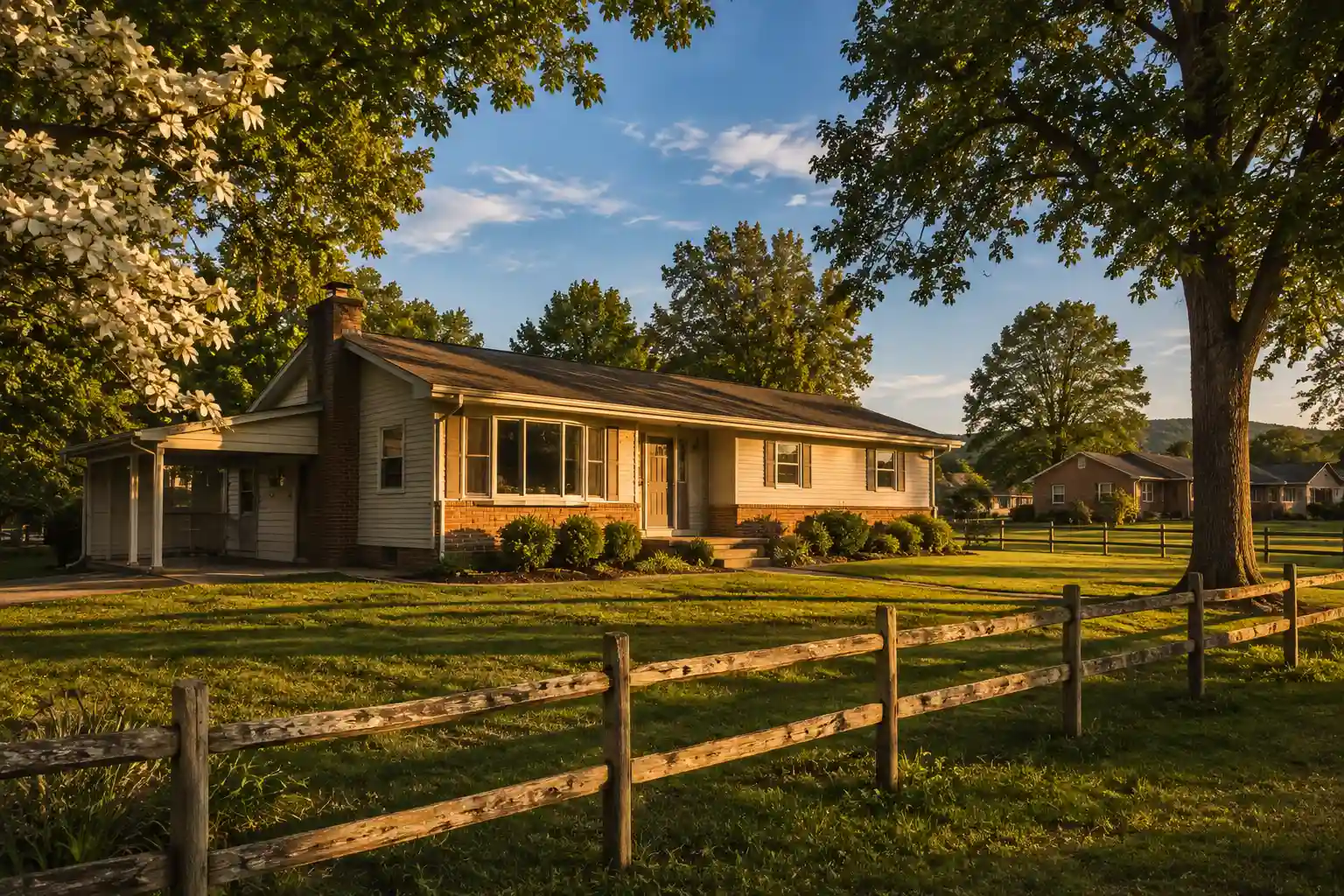
Properties along Walnut Hill Road include single-family residences built from the 1940s through the 1990s, with square footages ranging from approximately 770 to 1,917 square feet. Lot sizes run from half an acre to four-plus acres. What I tell my clients who are evaluating this corridor is that the older housing stock is precisely what creates the value-add play: you can acquire, renovate, and either flip or hold for rental income at numbers that pencil out far more favorably than in Johnson City proper.
No City Taxes and Infrastructure Access
Here is a detail that matters enormously for your cash flow analysis: some Walnut Hill properties offer city water and sewer service with no city taxes. That combination is unusual and directly impacts your net operating income on a rental property. You get the infrastructure reliability of municipal services without the tax burden.
How Bristol Rental Demand Supports Your Walnut Hill Investment
Rental demand is the engine that drives any investment property, and Walnut Hill benefits from a convergence of employment centers that generate consistent tenant interest.
- Bristol Regional Medical Center is minutes away, creating steady demand from healthcare workers seeking affordable housing close to shifts
- The Pinnacle is just two minutes from Walnut Hill, serving as one of the region’s premier retail and dining destinations and a major employment hub
- I-81 corridor access lets tenants commute efficiently to both Johnson City and Kingsport, expanding your renter pool to the entire Tri-Cities metro
Current rental rates in the Bristol and Walnut Hill area range from approximately $595 to $1,525 per month depending on unit size and condition. The average rent in East Tennessee’s Tri-Cities hovers around $950 to $1,000 for a one-bedroom unit. When you compare those rental figures against a $111,900 acquisition cost, the rent-to-price ratio is significantly more favorable than what you will find in Johnson City’s $344,900 median territory.
Bristol spillover demand accounts for roughly 20% of broader market velocity. That means tenant interest does not rely solely on Bristol’s local economy; it feeds from and into the larger Tri-Cities employment base.
The Housing Stock in Walnut Hill: What You Are Actually Buying
You need to understand what the typical Walnut Hill property looks like before you make an offer. This is not a neighborhood of new construction or cookie-cutter subdivisions.
- Build years: 1940s through 1990s, with the majority of single-family homes dating to the mid-20th century
- Square footage: 770 to 1,917 square feet for single-family residences
- Property types: A mix of single-family residences and mobile homes
- Lot sizes: Half an acre to four-plus acres, giving you room for potential expansion or accessory structures
The average resident age in the area is 43.7, and the average household income is $38,985. What does that tell you as an investor? Your tenant demographic is working-class and mid-career, which typically translates to stable, long-term renters rather than transient populations.
Schools serving the Walnut Hill area include Stonewall Jackson Elementary School (pre-K through 5th grade), Crossroads Alternative Education Program (7th through 12th), and Tennessee High School (9th through 12th). For tenants with school-age children, having assigned schools within reasonable distance adds to the area’s appeal.
One important note: the walkability and transit scores here are minimal (Walk Score of 6 out of 100, Transit Score of 0 out of 100). This is a car-dependent area, which is typical of suburban and rural East Tennessee. That is not a dealbreaker for renters in this market, because virtually every commuter in the Tri-Cities drives. But it does mean your property’s proximity to I-81 (via Exit 74B to US-11W and Island Road) becomes a genuine selling point when marketing to tenants.
How the Broader Tri-Cities Market in 2026 Shapes Your Walnut Hill Strategy
Understanding the macro picture helps you time and structure your Walnut Hill purchase correctly.
Mortgage Rate Environment
The 30-year fixed-rate mortgage is projected to average 6% for 2026, easing to 5.9% by December from 6.2% in late 2025. Both Fannie Mae and NAR’s Chief Economist are aligned on this trajectory. For you as an investor, that slight downward trend means refinancing opportunities may improve in early 2027 if you acquire now.
Johnson City Market Context
Johnson City home prices were up 11.2% compared to the same period last year over the three months ending May 2026, selling for a median price of $350K. The sale-to-list price ratio was at 95.97% as of February 2026, meaning buyers are negotiating roughly 4% off asking prices. That gap between asking and closing is where your negotiation leverage lives.
The pending-to-active ratio in Johnson City is 0.52, indicating a market that leans toward sellers without being overheated. Fresh inventory churns fast, but listings that age past the median are where the real negotiation room opens up, and the same principle applies across the border in Bristol’s Walnut Hill corridor.
Distressed and Below-Market Opportunities
Bank-owned and auction properties do appear in the Bristol 37620 ZIP code along the Walnut Hill Road corridor. Properties in various stages of foreclosure or bank ownership represent potential below-market acquisition opportunities, but they require careful due diligence on title, condition, and repair costs. Having closed over 275 transactions across this region, I work with investors on this exact type of analysis regularly, and the difference between a smart acquisition and a money pit often comes down to the inspection and title work done before the offer.
What the Right Strategy Looks Like for Walnut Hill, Bristol Buyers
Every home, every client, and every investment thesis is different. That is the core philosophy behind how I approach real estate at Ridgeline Property Group. I do not rely on generic advice or cookie-cutter plans. Instead, I build a customized strategy around your goals, your timeline, and the current market conditions.
For Walnut Hill specifically, that means understanding whether you are pursuing a buy-and-hold rental, a renovation flip, or a hybrid approach. The answer changes your offer strategy, your inspection priorities, and your financing structure. Bristol’s flat pricing environment in 2026 means you are not competing against aggressive appreciation-driven bidders, which gives you the breathing room to negotiate thoughtfully.
What I always recommend to investors evaluating this corridor is simple: run the numbers conservatively, factor in renovation costs using local contractor estimates (I maintain trusted vendor partnerships throughout Northeast Tennessee), and underwrite your rental income at the lower end of the $595 to $1,525 range rather than the top.
Frequently Asked Questions About Buying in Walnut Hill, Bristol
What is the average home price in Walnut Hill, Bristol, Tennessee?
The average home value in Walnut Hill is approximately $111,900. This makes it one of the most affordable entry points in the entire Tri-Cities region. Properties range from smaller homes around 770 square feet to larger residences approaching 1,917 square feet, with lot sizes spanning half an acre to over four acres.
How does Walnut Hill compare to Johnson City for real estate investment?
Johnson City’s median sold price over the last six months is $344,900, making it roughly three times the average Walnut Hill home value. Johnson City offers stronger appreciation (around 7.5%), while Bristol and Walnut Hill offer lower entry costs and flat pricing that favors buyer negotiation. Your strategy determines which market fits better.
What are rental rates near Walnut Hill, Bristol?
Rental rates in the Bristol and Walnut Hill area currently range from approximately $595 to $1,525 per month depending on property size and condition. One-bedroom units across the Tri-Cities typically hover around $950 to $1,000 per month. These figures create favorable rent-to-price ratios relative to acquisition costs in the area.
Are there properties with no city taxes in Walnut Hill?
Yes. Some Walnut Hill properties offer city water and sewer service without being subject to city taxes. This directly benefits your cash flow as an investor by reducing ongoing carrying costs while still providing the infrastructure reliability that tenants expect.
What schools serve the Walnut Hill area in Bristol?
Schools assigned to the Walnut Hill area include Stonewall Jackson Elementary School (pre-K through 5th grade), Crossroads Alternative Education Program (7th through 12th grade), and Tennessee High School (9th through 12th grade). School access matters for attracting family tenants to rental properties.
How close is Walnut Hill to I-81 and major employers?
Walnut Hill is approximately two minutes from The Pinnacle shopping center, I-81 access, and Bristol Regional Medical Center. Exit 74B provides direct access via US-11W and Island Road. This proximity to employment and transportation infrastructure supports consistent tenant demand.
Is the Bristol housing market crashing in 2026?
No. The market is normalizing, not crashing. After years of unsustainable growth, prices are flattening and inventory is rising across the Tri-Cities. Bristol specifically is seeing flat or very slight pricing dips, which creates buying opportunities rather than signaling distress.
What types of homes are available along Walnut Hill Road?
Properties include single-family residences and mobile homes, built primarily from the 1940s through the 1990s. Square footages range from approximately 770 to 1,917 square feet. The older housing stock presents renovation and value-add opportunities for investors willing to improve properties.
What mortgage rates should investors expect in 2026?
The 30-year fixed-rate mortgage is projected to average 6% for 2026, with forecasts showing it easing to 5.9% by December. This slight downward trajectory from the 6.2% seen in late 2025 may create refinancing opportunities for investors who acquire properties now.
How much negotiation room exists in Bristol’s market right now?
The sale-to-list price ratio across the broader Tri-Cities market was 95.97% as of early 2026, meaning buyers are typically negotiating approximately 4% below asking price. With inventory returning to pre-pandemic levels and Bristol pricing remaining flat, your negotiation position as a buyer is strong.
The Bottom Line on Investing in Walnut Hill, Bristol
Walnut Hill gives you something increasingly rare in 2026: a low entry point in a market with genuine rental demand, infrastructure access, and room to add value through renovation. With average home values around $111,900, proximity to Bristol Regional Medical Center and The Pinnacle, and the potential for no city taxes on certain properties, the fundamentals support a disciplined investment strategy.
Great real estate is not about closing transactions. It is about creating the right strategy from day one. When evaluating closing costs and understanding the homebuying process, partnering with someone familiar with local market conditions makes all the difference. With 17 five-star reviews and over 275 closed transactions across Northeast Tennessee, I specialize in helping investors build customized acquisition plans grounded in local data, not generic advice. If you are evaluating Walnut Hill or anywhere in the Tri-Cities for your next investment, I would welcome the conversation. To learn more about the buying process and explore available properties, search homes for sale in Bristol or reach out to me, Alexa Frado, at Ridgeline Property Group: 423-484-3084.