
What should real estate investors know about homes and condos near Downtown Johnson City and the ETSU area in 2026?
Downtown Johnson City and the ETSU corridor offer investors entry points well below the national median, consistent rental demand from university tenants, and active downtown revitalization that is driving appreciation in both single-family homes and condos.
Why Downtown Johnson City and ETSU Matter to Investors Right Now
If you’ve been watching Northeast Tennessee from the sidelines, the window for strategic entry is still open, but the fundamentals are shifting quickly. Over the three months ending May 2026, Johnson City home prices were up 11.2% compared to the same period last year, selling for a median price of $350K. That appreciation is real, and it’s being fueled by forces that aren’t slowing down anytime soon.
Downtown Johnson City welcomed over 655,675 visitors with 3.3 million visits in the past 12 months, marking a 10% increase since 2022. The City of Johnson City completed a $33 million revitalization of the West Walnut Street District, converting an industrial zone into a mixed-use corridor. And ETSU’s medical programs, paired with Ballad Health’s regional footprint, anchor roughly 7,000 jobs in healthcare and education alone. I’ve spent 13 years in this market, and what I can tell you is that the convergence of university demand, downtown investment, and relative affordability is creating the kind of conditions investors rarely find in markets with this much momentum.
Johnson City’s median sale price remains 20% lower than the national average. That gap is exactly why you’re reading this.
The Tree Streets: Downtown Johnson City’s Most Investable Neighborhood
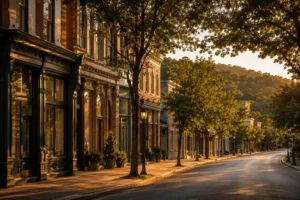
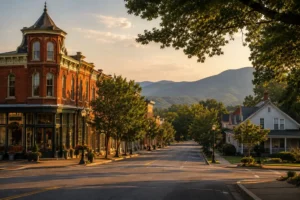
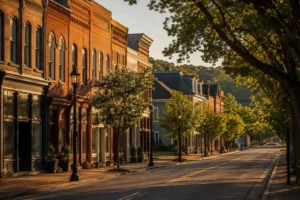
The Tree Streets neighborhood, centered around Walnut Street, Maple Avenue, and Pine Street, is the cultural heartbeat of Johnson City and sits just northwest of the ETSU campus. For investors, this is where the numbers and the narrative align.
Over the three months ending May 2026, Downtown Johnson City home prices were selling for a median price of $175K, reflecting the mix of condo units, older housing stock, and repositioned properties. Meanwhile, the median sale price per square foot hit $231, up 11.6% year-over-year. That spread between per-unit and per-square-foot pricing tells you something important: smaller units and condos are still accessible, but renovated product is commanding premium rates.
What does that actually mean for your portfolio? Studios and one-bedrooms in the Downtown and Tree Streets area start around $800 per month in rent, making this one of the most affordable mid-sized city options in the Southeast. For an investor picking up a condo in the $150K to $200K range, that rental floor provides a solid baseline for cash flow modeling.
What Makes Tree Streets Sticky for Tenants
This isn’t just about proximity to campus. Tree Streets is a charming neighborhood known for its tree-named streets, featuring a vibrant mix of historic homes, local businesses, and ETSU students. Downhome Coffee Shop on West State of Franklin Road functions as a de facto community hub for grad students, creatives, and remote workers. Back Door Records, Burg’r & Barrel, and Main Street Pizza Company round out the kind of walkable, livable neighborhood that keeps tenants renewing leases.
The top reasons residents love Tree Streets include its beauty, community orientation, dog friendliness, historic character, and genuine walkability. Buffalo Mountain Park’s trailhead is accessible without a car from parts of this neighborhood, and Powell Square Park and Founders Park provide additional green spaces within the downtown core. When tenants feel connected to a neighborhood, they stay. And that reduces your turnover costs.
ETSU Area Properties: The University Parkway Corridor
The zone orbiting University Parkway, West Walnut Street, and the State of Franklin Road and Gilbreath Drive intersection is where investor math gets especially compelling. This is the ring surrounding ETSU’s 350-acre campus, and the W. Watauga Avenue corridor connects it to the South Side neighborhood.
Entry-level single-family homes in the immediate ETSU radius start in the $180,000 to $250,000 range with older stock, while renovated or repositioned properties approach $280,000 to $320,000. Millennials represent 35% of buyers and are chasing the ETSU area specifically, keeping demand steady even as citywide inventory loosens slightly.
What I tell investors looking at this corridor is to focus on the gap between aged listings and fresh inventory. The median active listing in Johnson City churns fast, but listings that sit past that midpoint are where negotiation room lives. With a sale-to-list price ratio of 95.97% as of early 2026, only 25% of homes sold over asking price. That means you have real leverage on properties that have been sitting, particularly older homes near campus that need cosmetic updates.
Major Downtown Developments Driving Future Value
You can’t evaluate investment properties near Downtown Johnson City without understanding the pipeline of projects reshaping the area. These are not speculative; they’re funded, approved, and in progress.
The John Sevier Center Redevelopment
Originally built in 1924 as a luxury hotel, the John Sevier Center is being reimagined by LMG to include retail shops, event spaces, fine dining, rooftop bar access with scenic views, and a modern 136-room boutique hotel. City Assistant Manager Alicia Summers has called this project “a major investment in the economic future of downtown Johnson City.” For investors holding residential property within walking distance, a boutique hotel and commercial hub like this raises the floor on neighborhood desirability.
The Henry On Main
Two local developers are transforming a former department store into The Henry On Main, a 100,000-square-foot mixed-use project featuring 32 residential lofts and approximately 22,000 square feet of commercial space. The lofts include high-volume ceilings, large windows, exposed brick, and wood beams. This project signals the kind of urban residential product that commands premium rents and attracts the professional tenant profile investors prefer.
Infrastructure Investment
The Johnson City Development Authority supported over $300K in Downtown Improvement Grants and $52K in Facade Grants in 2025 alone. Over the past five years, more than 50 businesses have come into downtown while only 10 have closed, a net gain of 40 businesses even accounting for the pandemic years. This is the kind of public-private momentum that sustains long-term property value growth.
How to Underwrite a Downtown Johnson City or ETSU Investment Property
Here is where I see investors make the most common mistake in this market. The median asking price for active listings in Johnson City is $430,000, but the median sold price over the past six months was $344,900. If you’re building your pro forma off listed prices, you’re overpaying before you even make an offer. Always underwrite from the sold side.
The middle half of all sales closed between $220K and $428K based on 543 closed sales tracked over the last six months. For the downtown and ETSU corridors specifically, the sweet spot for investors is typically the lower half of that range, where older craftsman bungalows, converted duplexes, and condo units live.
Key Numbers for Your Analysis
- Median city rent: $880 per month
- Median household income: $58,057
- Average days on market: 53 days, up from 41 days last year
- Pending-to-active ratio: 0.52, leaning toward sellers but not overheated
- Median listing price per square foot (CBSA, June 2026): $207
- Mortgage rate forecast: 30-year fixed averaging 6% for 2026, potentially easing to 5.9% by December
One risk factor worth noting: floods can hike insurance costs by 12% in certain zones near downtown. Factor that into your operating expense projections before you close.
Timing, Seasonality, and Your Next Move in Johnson City
August to December is typically the best time to buy a house in Johnson City, when supply is high and demand is low. You’re reading this at the start of that window in 2026, which means inventory should be building and competition softening compared to spring. With homes averaging 53 days on market and the sale-to-list ratio at 95.97%, patient investors who target aging listings can negotiate meaningfully below ask.
Having closed over 275 transactions across Northeast Tennessee and holding a 5 out of 5 average review rating from 17 clients, I build a customized strategy around each investor’s goals, timeline, and the current market rather than offering generic advice. As one repeat client put it: “Alexa makes the process so easy and stress-free. As long as my business is being conducted in Tennessee, Virginia, or North Carolina, she will continue to be my choice.”
Frequently Asked Questions
What is the median home price near Downtown Johnson City in 2026?
Over the three months ending May 2026, Downtown Johnson City home prices were selling for a median price of $175K, reflecting the mix of condo units, older stock, and repositioned properties. The median sale price per square foot was $231, up 11.6% year-over-year. Your entry point depends heavily on whether you target unrenovated condos or updated single-family homes.
Are condos near ETSU a good investment in Johnson City?
Condos near ETSU benefit from consistent rental demand driven by the university’s enrollment and medical programs. Studios and one-bedrooms in the Downtown and Tree Streets area start around $800 per month in rent, and entry-level properties can be found in the $150K to $200K range, making the rent-to-price ratio attractive for cash flow investors.
How much have Johnson City home prices appreciated recently?
Over the three months ending May 2026, Johnson City home prices were up 11.2% compared to the same period last year, selling for a median price of $350K. Statewide forecasts project 3 to 4% appreciation through the remainder of 2026, with downtown revitalization bolstering local gains.
What major developments are happening in Downtown Johnson City?
The John Sevier Center is being redeveloped into a 136-room boutique hotel with retail and dining. The Henry On Main is converting a former department store into 32 residential lofts and 22,000 square feet of commercial space. Both projects are actively underway and signal strong institutional confidence in downtown’s future.
How long do homes stay on the market near Downtown Johnson City?
On average, homes sell after 53 days on the market in Johnson City, up from 41 days last year. This gives investors more time to negotiate, particularly on listings that have sat beyond the median. Well-priced homes in sought-after neighborhoods like the Tree Streets still move faster than the citywide average.
What is the rental demand like near ETSU?
ETSU’s campus, medical programs, and Ballad Health’s regional presence anchor roughly 7,000 jobs in healthcare and education. Millennials represent 35% of buyers in the ETSU area, and the university creates year-round rental demand in the 37614 and 37604 ZIP codes. Properties along West Walnut Street and near Founders Park are prime targets.
Is Johnson City affordable compared to the national average?
Johnson City’s median home value of $276,903 is 20% lower than the national average of $359,870. The median household income is $58,057, and the median commute time is about 15 minutes, making it one of the more affordable and livable mid-sized markets in the Southeast.
What neighborhoods in Johnson City are best for real estate investors?
The Tree Streets and Downtown corridor offer walkability, historic character, and strong tenant retention. The ETSU and University Parkway corridor provides lower entry points and consistent student and faculty rental demand. Both areas benefit from the $33 million West Walnut Street District revitalization.
What are the risks of investing near Downtown Johnson City?
Flood insurance can increase operating costs by 12% in certain downtown zones. The pending-to-active listing ratio of 0.52 leans toward sellers, limiting inventory. And the gap between median asking price ($430,000) and median sold price ($344,900) means careful underwriting is essential to avoid overpaying.
What mortgage rates should Johnson City investors expect in 2026?
The 30-year fixed-rate mortgage is expected to average 6% for 2026, potentially easing to 5.9% by December. At those rates, a $290,000 property runs approximately $1,700 per month. Tennessee’s conforming loan limit of $766,550 covers the vast majority of local deals.
The Bottom Line
Downtown Johnson City and the ETSU corridor represent one of the most compelling investor opportunities in Northeast Tennessee right now. You get entry points well below national averages, institutional-grade downtown development in the pipeline, and a university-driven tenant base that does not disappear when the broader market softens. The numbers support it: 11.2% price appreciation, $175K median downtown entry, and $800-plus rents on studios and one-bedrooms.
Every investment property is different, and every strategy should be, too. With 13 years of local experience and 275 closed transactions across Northeast Tennessee, I don’t rely on cookie-cutter advice. If you’re evaluating homes or condos near Downtown Johnson City or ETSU, call me at 423-484-3084. At Ridgeline Property Group, we build a customized strategy around your goals, your timeline, and the current market, because great real estate is about creating the right strategy from day one.