
What should buyers and investors know about Holston Hills in Bristol, Tennessee, and how does it fit into the broader Tri-Cities real estate market?
Holston Hills in Bristol, Tennessee sits within one of Northeast Tennessee’s most affordable and stable real estate corridors, offering buyers a combination of historic charm, Holston River proximity, and entry prices well below national averages. If you are considering this area as an investor or a buyer relocating to the Tri-Cities, here is what you need to know right now.
Why Holston Hills and Bristol Matter to Tri-Cities Buyers Right Now
The Tri-Cities market is in a moment that rewards informed buyers. Over the three months ending May 2026, Johnson City home prices were up 11.2% year-over-year, with a citywide median sale price of $350,000. That momentum is rippling across the region, and Bristol, just 25 minutes northeast of Johnson City along Interstate 26, is catching buyer attention for good reason.
With more than 13 years of experience serving Johnson City, Kingsport, Bristol, Jonesborough, Elizabethton, Piney Flats, Gray, and the surrounding communities, I can tell you that Bristol’s Holston Hills corridor represents something increasingly rare in this market: room to breathe, both in terms of lot sizes and price points. The Holston River, which lends its name to this area, has shaped community identity here for over a century. That connection to the river, combined with proximity to Bristol’s downtown and easy highway access, makes this pocket worth a serious look, whether you are buying your first investment property or your next primary residence.
Understanding the Holston Hills Location in Bristol, Tennessee
Where Holston Hills Sits in the Tri-Cities Region
You will find Holston Hills positioned along the Holston River corridor on Bristol’s eastern side. Bristol itself straddles the Tennessee-Virginia state line, giving residents and investors an unusual advantage: access to two states’ worth of amenities, employment, and, in some cases, tax structures. The “Holston” name runs deep in this part of East Tennessee and Southwest Virginia, tracing back to the river system that connects the entire region.
What does that mean practically? You are roughly 25 to 30 minutes from downtown Johnson City via Interstate 26, and Kingsport is similarly accessible. Bristol Motor Speedway, one of the region’s most significant economic drivers, sits just to the northwest. The broader area benefits from Ballad Health’s regional presence, which anchors healthcare employment across the Tri-Cities.
What the Homes Look Like
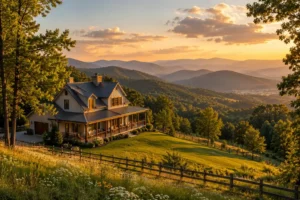
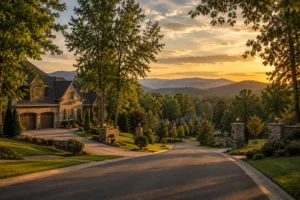
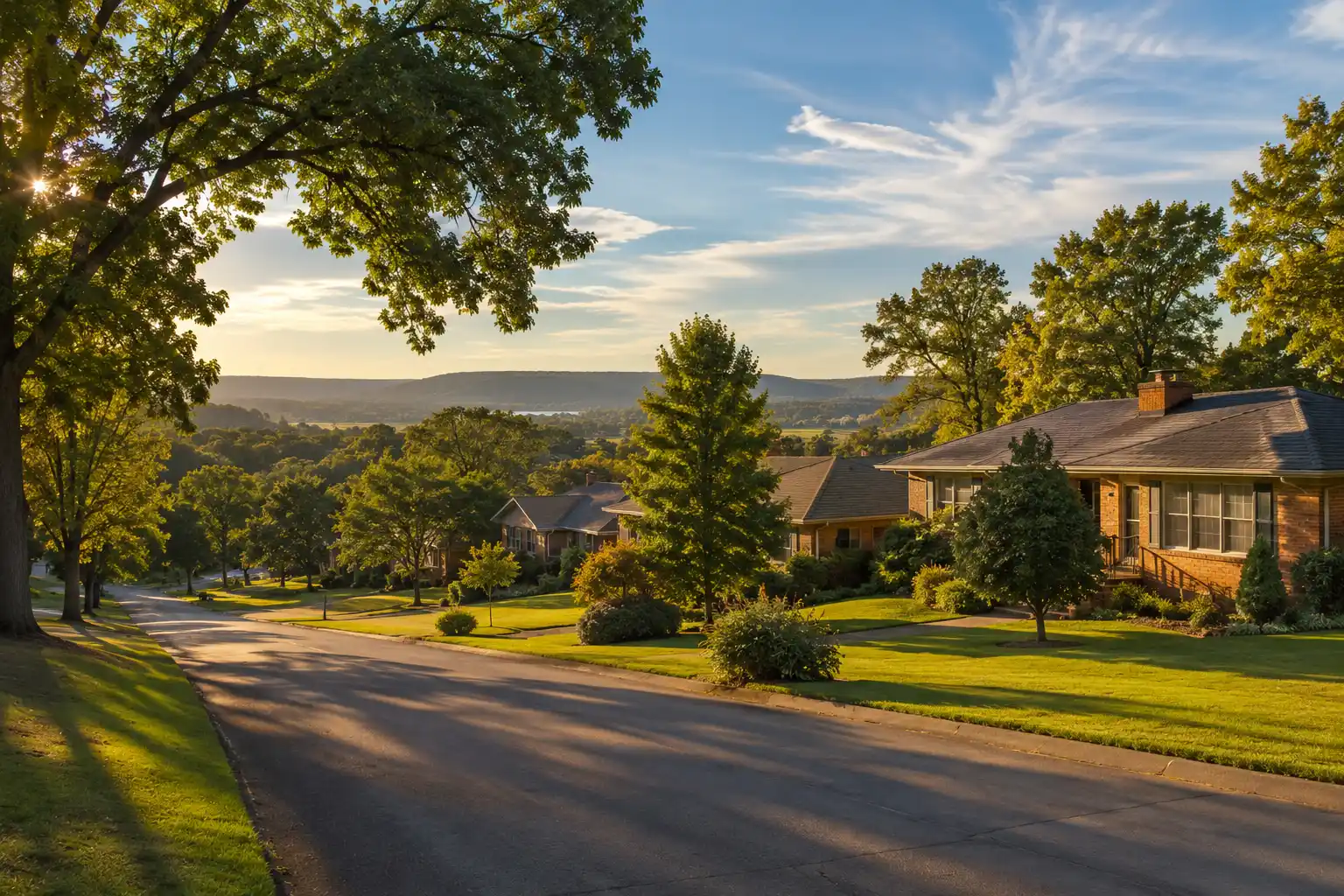
Bristol’s Holston Hills area features a mix of housing styles that reflect the neighborhood’s evolution over decades. You will find mid-century brick ranch homes on generous lots alongside newer construction. Many properties here offer something you will not easily find in Johnson City’s more in-demand pockets: larger parcels with mature tree cover, river views, and the kind of quiet that suburban developments closer to ETSU simply cannot replicate.
For context, the Johnson City median home value sits at $276,903, which is 20% below the national average of $359,870. Bristol’s pricing tends to run at or slightly below Johnson City’s, which means your entry cost in Holston Hills can be even more favorable for investors looking to maximize cash-on-cash returns.
How the Tri-Cities Market Sets Up for Investors in 2026
So what does the broader market picture look like when you are underwriting a deal near Holston Hills?
Here is where I encourage every investor client to pay close attention. The median sold price in Johnson City over the last six months is $344,900, but the median asking price of homes currently for sale is $430,000. That gap tells you something important: sellers are listing optimistically, and buyers who do their homework are closing well below ask. The sale-to-list price ratio hit 95.97% in early 2026, confirming that negotiation room exists in nearly every transaction.
Having closed over 275 transactions across this market, I have seen how that gap plays out at the offer table. The investors who succeed here are the ones who build their strategy around closed-sale data, not listing prices. At Ridgeline Property Group, we do not rely on cookie-cutter approaches. Every property, every deal, and every client situation is different, and the numbers have to work for your specific goals.
- Median listing price per square foot (Johnson City CBSA): $207 as of June 2026
- Days on market: Homes are averaging 53 days on market citywide
- Pending-to-active ratio: 0.52, meaning demand is healthy but not overheated
- Inventory trajectory: Moving toward 3.5 to 4 months’ supply, up from 2.7 in late 2025
That rising inventory number is music to an investor’s ears. More supply means more options and more negotiation leverage, especially in areas like Bristol’s Holston Hills where competition from owner-occupant buyers can be less intense than in Johnson City’s core neighborhoods.
Comparing Holston Hills to Other Tri-Cities Neighborhoods
You might be weighing Holston Hills against other pockets in the Tri-Cities. Here is how a few popular areas stack up so you can see where the value sits.
Downtown Johnson City and the Tree Streets
Downtown Johnson City’s Tree Streets sold for a median price of $175,000 over the three months ending May 2026. That sounds like a bargain, but the housing stock is older, bungalows and craftsman cottages, and fully renovated homes push well above $300,000. You are also competing with ETSU-driven rental demand, which can be a double-edged sword: strong renter pools, but higher per-square-foot acquisition costs on renovated product.
Boone’s Creek
Free-standing homes in Boone’s Creek typically sell between $200,000 and $400,000, with larger new construction reaching $650,000. Schools here earn A ratings across the board, from Lake Ridge Elementary through Science Hill High School, which makes Boone’s Creek a magnet for families. Investors targeting the family-rental market may prefer Boone’s Creek, but your entry price will be higher.
Where Holston Hills Fits
Bristol’s Holston Hills corridor tends to offer larger lots and lower per-unit costs than either of those Johnson City neighborhoods. For an investor focused on cash flow rather than appreciation speed, or for a buyer who values space and privacy over walkability, Holston Hills presents a compelling alternative. The tradeoff is a slightly longer commute to Johnson City’s employment centers, though Bristol’s own economy, anchored by the Speedway, Ballad Health facilities, and the state-line commercial corridor, provides its own tenant base.
What I Tell My Clients About Buying in Bristol’s Holston Hills Area
When clients ask me about investing in Bristol’s Holston Hills corridor, the first thing I focus on is the numbers behind the narrative. Bristol benefits from that same regional tailwind.
Here is what matters for your strategy:
- Rental demand: Median rent in Johnson City is $880. Bristol’s rents track similarly, and with a median home value well below $300,000, the rent-to-price ratio can work in your favor depending on the specific property.
- Seasonal timing: August through December is typically the best window to buy in the Tri-Cities, when supply is high and demand softens. If you are reading this in late summer 2026, your timing is strong.
- Insurance considerations: Proximity to the Holston River means you need to verify flood zone designations.
- Mortgage rates: The 30-year fixed rate is expected to average 6% for 2026, easing toward 5.9% by December. Every fraction of a point matters when you are running investment pro formas.
With 17 five-star reviews from clients across the Tri-Cities, one thing I hear consistently is that the personalized approach matters. One of my past clients put it well: “Alexa makes the process so easy and stress-free.” That is not just about personality. It is about building a customized strategy around your goals, your timeline, and the current market, not a template someone downloaded off the internet.
Market Stability and Long-Term Outlook for Holston Hills Investors
You want to know whether this market has legs. According to current housing market forecasts, the Tri-Cities market is projected to remain steady with sustained growth through 2026 and beyond. The regional economy, anchored by East Tennessee State University’s medical programs, Ballad Health’s dominance in healthcare, and outdoor tourism from the Nolichucky River to the Tweetsie Trail, provides a diversified foundation that insulates the area from single-industry risk.
Johnson City’s overall cost of living is 3% lower than the national average. Pair that with a median household income of $58,057 and a median home value far below national benchmarks, and you get a market where tenants can actually afford to rent and buyers can actually afford to buy. That affordability is the engine behind long-term demand, and it is what gives me confidence recommending the Tri-Cities, including Bristol’s Holston Hills corridor, to investors who are thinking in five-to-ten-year horizons.
Frequently Asked Questions About Holston Hills and Bristol, Tennessee
What types of homes are available in the Holston Hills area of Bristol?
You will find a range of styles including mid-century brick ranch homes, raised ranches on generous lots, and some newer construction. Many properties feature mature trees, larger parcels, and proximity to the Holston River. The housing stock reflects decades of development, giving you options from starter-level investments to more substantial single-family homes.
How far is Holston Hills in Bristol from downtown Johnson City?
Bristol sits approximately 25 to 30 minutes northeast of downtown Johnson City via Interstate 26. The commute is straightforward highway driving, and you also have easy access to Kingsport in a similar timeframe, making the entire Tri-Cities region accessible from this location.
Is Bristol, Tennessee a good market for real estate investors in 2026?
Bristol benefits from the same regional economic drivers as Johnson City, including Ballad Health and the Bristol Motor Speedway economy. With entry prices often below Johnson City’s median, rent-to-price ratios can be favorable. The broader Tri-Cities market is projected to see steady growth through 2026 and beyond.
What is the median home price in the Johnson City metro area?
Over the three months ending May 2026, the citywide median sale price in Johnson City was $350,000. The median home value tracked by U.S. News sits at $276,903, which is 20% below the national average. Bristol’s pricing generally tracks at or slightly below these figures.
What are mortgage rates expected to do in 2026 for Tri-Cities buyers?
The 30-year fixed rate is expected to average 6% for 2026, with projections showing a dip to 5.9% by December. These rates represent a modest improvement from the 6.7% average in 2025, which can meaningfully impact monthly payments on investment properties.
How long are homes sitting on the market in the Tri-Cities?
Homes in Johnson City are averaging 53 days on market as of mid-2026, up from approximately 40 days previously. Days on market in the 45 to 55 range are expected to continue through year-end, giving buyers more time to evaluate without the frenzy of 2021 and 2022.
Are there flood risk concerns near Holston Hills in Bristol?
Yes. Properties near the Holston River should be evaluated for flood zone classification. Always verify FEMA flood maps before making an offer on any property in the river corridor.
What is the best time of year to buy near Holston Hills?
August through December is typically the strongest buying window in the Tri-Cities, when inventory is higher and buyer competition drops. If you are an investor looking for negotiation leverage, the fall and early winter months historically offer the best terms.
How does Bristol compare to Boone’s Creek for investment properties?
Boone’s Creek offers strong school ratings (A-rated across the board) and family appeal, with homes typically selling between $200,000 and $400,000. Bristol’s Holston Hills corridor often provides larger lots at lower per-unit costs, which can translate to better cash flow for investors focused on rental income rather than school-district premium.
What should first-time investors know before buying in Bristol, Tennessee?
Start with closed-sale data rather than listing prices. The gap between median asking price ($430,000) and median sold price ($344,900) in Johnson City illustrates that sellers are listing optimistically. Build your investment model around actual transaction data, verify flood zones, and work with an agent who knows the nuances of this specific market.
The Bottom Line on Holston Hills in Bristol, Tennessee
Holston Hills and the broader Bristol corridor offer Tri-Cities investors and buyers something increasingly hard to find: affordability, space, and a stable regional economy, all within 30 minutes of Johnson City’s amenities. The 2026 market gives you rising inventory, improving mortgage rates, and negotiation room that did not exist two years ago.
Every home, every client, and every investment is different. That is exactly why I do not rely on generic advice at Ridgeline Property Group. If you are considering Holston Hills in Bristol, or anywhere else in Northeast Tennessee, I would love to build a customized strategy around your specific goals. Reach out to me, Alexa Frado, at 423-484-3084 or connect with Ridgeline Property Group at 600 N Broadway St, Johnson City, TN 37601. Let’s make sure your next move is the right one.