

Yes, you can sell your house as-is in Northeast Tennessee.
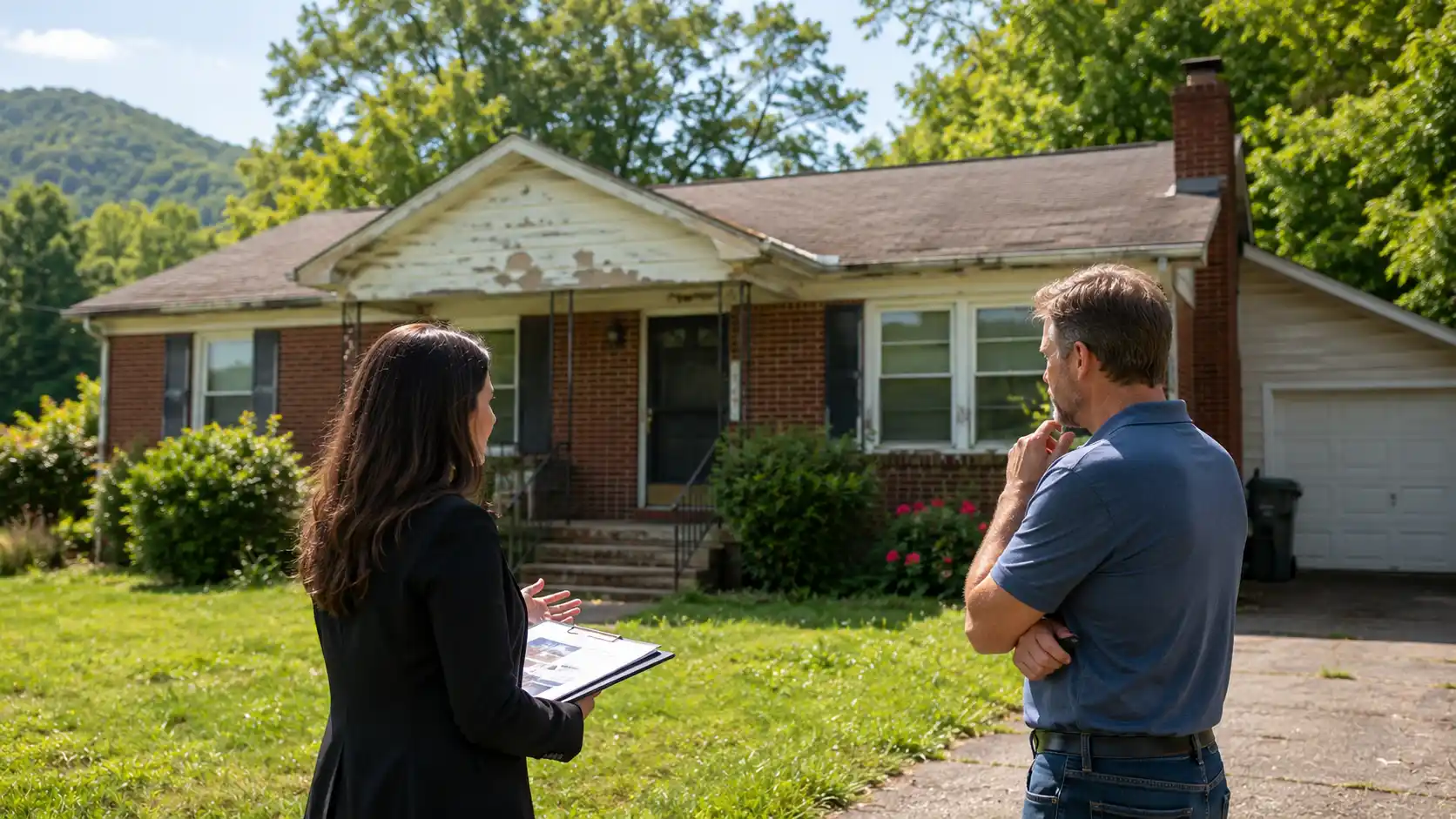
Selling as-is generally means you are offering the property in its current condition and do not plan to complete major repairs or renovations before closing. This can be a practical strategy when you are dealing with deferred maintenance, an inherited home, a rental property, an upcoming relocation, or repairs that are beyond your available time or budget.
However, selling as-is does not mean that pricing, presentation, disclosures, inspections, financing, and contract terms no longer matter.
A home in Johnson City with an older roof may require a different strategy from a Kingsport rental needing cosmetic work, an inherited property in Bristol, a farmhouse with acreage, or a lake property near Boone Lake.
The question is not only whether you can sell as-is.
The more important question is:
What selling strategy will give you the strongest combination of price, convenience, certainty, and net proceeds?
What Does Selling a House As-Is Mean?
Selling as-is usually means that the seller does not intend to make repairs or provide major improvements before the sale.
The property may have:
- An older roof
- Outdated flooring or finishes
- Deferred maintenance
- Damaged drywall or trim
- An aging HVAC system
- Foundation concerns
- Plumbing or electrical issues
- Unwanted furniture or belongings
- Overgrown landscaping
- Cosmetic damage
- An unfinished renovation
- Well or septic concerns
The condition should be considered when the home is priced, presented, marketed, and negotiated.
An as-is sale does not necessarily mean the property is unlivable. A well-maintained home can also be sold as-is when the seller simply does not want to negotiate future repairs.
Selling As-Is Does Not Mean You Can Ignore Tennessee Disclosure Requirements
This is one of the most important distinctions for a Northeast Tennessee homeowner.
For qualifying residential transactions involving one to four dwelling units, Tennessee generally requires the seller to provide either a residential property condition disclosure or a disclaimer statement. The disclaimer is permitted when the buyer agrees to waive the required disclosure. Tennessee’s current disclosure form also explains that sellers are not generally required to order their own inspection or repair disclosed items unless repair obligations are included in the purchase contract.
The disclosure or agreed disclaimer is generally delivered before all parties fully execute the purchase contract. The sales agreement ultimately controls matters such as whether the seller must complete a repair or whether the buyer accepts a particular condition as-is.
An as-is sale should never be treated as permission to conceal, misrepresent, or provide inaccurate information about the property. Tennessee law preserves potential remedies for certain misrepresentations and failures to disclose material facts.
Some transfers may be exempt from portions of the residential disclosure law. Examples can include certain court-ordered transfers, fiduciary estate transfers, public auctions, foreclosures, and properties where the owner has not lived during the previous three years. Whether an exemption applies depends on the specific transaction.
For most homes built before 1978, federal rules also require the disclosure of known lead-based paint information and available records before the buyer signs the contract.
Because the correct forms and contract terms depend on the transaction, legal questions should be directed to a qualified Tennessee real estate attorney.
What Selling As-Is Does Not Automatically Mean
Several common assumptions about as-is sales can create confusion.
It Does Not Automatically Eliminate the Buyer’s Inspection
A buyer may still request an inspection period, depending on the terms of the offer.
The inspection may cover:
- The structure
- Roof and attic
- Electrical components
- Plumbing
- Heating and cooling
- Crawlspace or basement
- Moisture intrusion
- Well and water quality
- Septic system
- Wood-destroying insects
- Radon or mold
- Other property-specific concerns
A property disclosure is not a replacement for the buyer’s independent inspection.
It Does Not Prevent a Buyer From Asking for Repairs
A buyer can ask for almost anything during a negotiation.
Whether you must agree is another question.
Depending on the purchase contract, you may be able to:
- Decline the request
- Agree to complete a repair
- Offer a credit
- Adjust the sales price
- Address only selected items
- Maintain the original as-is position
- Allow the transaction to end if the parties cannot agree
The exact rights of each party depend on the signed contract.
It Does Not Guarantee That No Repairs Will Be Necessary
You may enter the market intending to make no repairs, but the buyer’s lender, insurance company, appraiser, or title professional may identify an issue that must be resolved before closing.
This is especially important when buyers are using financing with property-condition requirements.
It Does Not Mean the Property Can Be Priced Like a Fully Updated Home
Buyers usually consider the estimated repair cost, inconvenience, risk, and uncertainty associated with the property.
A home needing $20,000 in work does not always sell for exactly $20,000 less than an updated home. Buyers may also account for:
- Unexpected repair costs
- Contractor availability
- Time required to complete the work
- Financing limitations
- Temporary housing
- The possibility of hidden damage
- The inconvenience of managing a project
Pricing should be based on comparable properties, buyer expectations, local competition, and the overall condition—not simply the seller’s desired net amount.
It Does Not Mean You Must Sell to an Investor
An as-is property can be listed on the open market.
Depending on its condition and price, potential buyers may include:
- Owner-occupants
- Buyers seeking a renovation project
- Contractors
- Investors
- Landlords
- Cash buyers
- Buyers using renovation financing
The strongest strategy depends on the property and the type of buyer most likely to purchase it.
When Selling As-Is May Make Sense
Selling without major repairs can be a reasonable choice when the cost, risk, or inconvenience of improving the property outweighs the likely benefit.
You Inherited the Property
An inherited house may contain personal belongings, deferred maintenance, outdated finishes, or repairs the heirs do not want to coordinate.
This can be particularly difficult when:
- Multiple siblings are involved
- The heirs live outside Northeast Tennessee
- The estate has limited funds
- The home has been vacant
- No family member knows the property’s complete history
- The family wants to settle the estate efficiently
An as-is sale may reduce the number of projects the family must manage, although the estate’s representative should first confirm ownership, probate requirements, and authority to sell.
You Are Relocating
Coordinating repairs becomes more difficult when you are moving for work, purchasing another home, or leaving the area.
You may decide that avoiding weeks or months of contractor scheduling is more valuable than completing every possible improvement.
The Property Needs Extensive Work
When a house needs structural repairs, major mechanical systems, extensive cleanup, or a complete renovation, the cost can become difficult to predict.
Selling as-is may allow a buyer with the right experience and resources to complete the work according to their own plan.
You Are Selling a Rental Property
A landlord may choose an as-is strategy when:
- The property has tenant-related damage
- The finishes are outdated
- The owner does not want another renovation project
- The property has been vacant
- The owner is simplifying an investment portfolio
- The seller wants to avoid coordinating work from another state
You Have a Limited Preparation Budget
You should not assume that you must borrow money or use all your available savings to renovate before listing.
A strategic sale can be built around the home’s present condition.
The Cost of Waiting Is Becoming Too High
Delaying the sale can create continuing expenses such as:
- Mortgage payments
- Property taxes
- Insurance
- Utilities
- Lawn maintenance
- HOA fees
- Security
- Vacancy-related risk
- Additional property deterioration
The potential benefit of completing repairs should be compared with both the project cost and the carrying costs created by the delay.
Can a Buyer With FHA, VA, or USDA Financing Purchase an As-Is Home?
Possibly—but the property’s condition matters.
An as-is designation does not automatically prevent a financed buyer from purchasing the house. However, some loan programs include property standards designed to address safety, sanitation, and structural soundness.
VA guidance states that a property must satisfy its minimum property requirements before the loan guaranty is issued. USDA’s guaranteed program also uses property requirements, and HUD maintains the FHA Single Family Housing Policy Handbook as the primary source for FHA requirements.
In practice, this means that certain property conditions may:
- Require correction before closing
- Limit the financing options available
- Require a different loan product
- Narrow the likely buyer pool
- Make a cash or renovation-loan buyer more practical
This does not mean every cosmetic issue must be repaired. Peeling paint, missing utilities, unsafe railings, major water damage, structural concerns, or nonfunctioning essential systems may receive more attention than outdated cabinets or worn carpet.
The right marketing plan should consider the condition of the home and the financing buyers are likely to use.
You Can Sell As-Is Without Presenting the Home Poorly
“As-is” and “do nothing” are not always the same strategy.
Even when you do not plan to renovate, modest preparation can help buyers understand the property and see its potential.
Remove Trash and Excess Belongings
A buyer can more accurately evaluate a property when rooms, floors, garages, basements, and mechanical systems are accessible.
You do not necessarily need to empty every closet, but removing trash and excessive clutter can improve:
- Listing photographs
- Showing access
- Perceived room size
- The buyer’s confidence
- The inspector’s ability to examine the home
Complete Basic Cleaning
A house can need repairs and still feel cared for.
Cleaning kitchens, bathrooms, floors, windows, and visible surfaces may improve the overall impression without creating a renovation project.
Improve Basic Curb Appeal
Simple exterior work can prevent the home from appearing abandoned or neglected.
Consider:
- Mowing the lawn
- Removing branches and debris
- Trimming overgrown shrubs
- Clearing the porch
- Cleaning the walkway
- Making the entrance accessible
Gather Property Information
Useful documents may include:
- Previous inspection reports
- Repair invoices
- Roof information
- HVAC service records
- Well or septic records
- Surveys
- Permits
- Insurance claims
- Contractor evaluations
- Warranties
- Utility information
Providing organized information can help reduce uncertainty, although documents should be reviewed with your agent and, when necessary, an attorney.
Use Professional Photography
An as-is home still deserves accurate, professional presentation.
The photographs should show the property honestly while highlighting its strongest features, such as:
- Location
- Lot size
- Mountain or water views
- Garage or workshop space
- Original architectural details
- Room dimensions
- Outdoor living areas
- Acreage
- Layout
- Renovation potential
Ridgeline Property Group’s current marketing strategy includes professional photography, floor plans, a 3D tour, pricing guidance, and additional property-specific marketing when appropriate.
Should You Make Any Repairs Before Selling As-Is?
Possibly.
Selling as-is does not prevent you from completing a few carefully selected projects before listing.
You might decide to address an issue when it:
- Creates an immediate safety concern
- Prevents buyers from accessing part of the property
- Could greatly restrict financing
- Is relatively inexpensive to correct
- Makes the home appear abandoned
- Prevents an essential system from operating
- Creates a strong odor or moisture concern
- Is likely to distract buyers from the property’s stronger features
For example, removing trash, repairing a dangerous step, turning on utilities, fixing an active plumbing leak, or clearing access to the electrical panel may improve marketability without turning the preparation process into a complete renovation.
Before beginning anything expensive, compare the likely benefit with the cost and delay.
Your recently published article, Should I Renovate Before Selling in Northeast Tennessee?, provides a more detailed framework for evaluating improvements.
Listing As-Is Versus Accepting a Direct Cash Offer
These are two different strategies.
Listing As-Is on the Open Market
An open-market listing may provide access to a broader group of buyers and greater competition.
Potential advantages include:
- More exposure
- Professional marketing
- The possibility of multiple interested buyers
- A wider range of offer structures
- The opportunity to highlight the home’s strongest features
- A market-driven selling price
Possible challenges include:
- Showings
- Buyer inspections
- Appraisal or financing concerns
- A longer timeline
- Additional uncertainty before closing
Accepting a Direct Cash Offer
A direct cash offer may prioritize convenience and certainty.
Potential advantages may include:
- Fewer financing concerns
- A shorter inspection or due-diligence period
- A flexible closing date
- Reduced preparation
- Fewer showings
- A buyer experienced with repairs
Possible tradeoffs may include:
- Less exposure to the open market
- A price that accounts for repair risk and resale costs
- Fewer competing buyers
- Different fees or contract terms
Do not compare the offer prices alone.
Compare the estimated net proceeds after considering:
- Repairs
- Cleaning
- Preparation costs
- Commissions or fees
- Seller concessions
- Holding costs
- Closing timeline
- Financing risk
- Inspection terms
- Appraisal requirements
- The probability of reaching closing
The highest offer is not always the strongest offer, and the fastest offer is not always the best financial decision.
How Should an As-Is Home Be Priced?
Pricing is especially important when a property needs work.
Start by examining:
- Recently sold homes in similar condition
- Renovated homes that establish the upper end of the market
- Current competing listings
- The property’s location
- Lot size and usable land
- Layout and square footage
- Major systems
- Estimated repair scope
- Buyer demand for fixer-uppers
- Financing options available to likely buyers
Avoid pricing the property as though the repairs have already been completed.
Buyers comparing an as-is home with a move-in-ready home will consider both the visible work and the uncertainty associated with completing it.
Your pricing strategy should make the opportunity clear without unnecessarily giving away value.
A Practical As-Is Selling Process
Step 1: Schedule a Property Walk-Through
Before committing to repairs or accepting a direct offer, have the home evaluated from a real estate marketing perspective.
The purpose is to identify:
- The likely buyer
- The home’s strongest features
- Conditions that may affect financing
- Low-cost preparation opportunities
- Likely buyer objections
- Comparable local sales
- Potential listing and cash-offer strategies
Step 2: Clarify Your Priorities
Decide what matters most:
- Highest possible sale price
- Minimum preparation
- A specific closing date
- Avoiding showings
- Reducing uncertainty
- Selling inherited property efficiently
- Remaining in the home temporarily
- Avoiding contractor coordination
There may be a tradeoff between price, speed, convenience, and certainty.
Step 3: Review the Property’s Condition and Documents
Gather known information and relevant reports.
Do not guess about technical concerns. A qualified contractor, engineer, septic professional, electrician, plumber, roofer, or other specialist may be needed when you require an informed opinion.
Step 4: Decide What Preparation Is Worth Completing
Organize projects into three groups:
- Work worth completing
- Work to leave for the buyer
- Work requiring additional information before deciding
Step 5: Build the Pricing and Marketing Strategy
The home should be priced according to its actual condition and marketed to buyers capable of purchasing and improving it.
Step 6: Evaluate the Complete Offer
Consider:
- Price
- Financing
- Inspection period
- Repair language
- Appraisal contingency
- Seller-paid costs
- Closing date
- Possession
- Earnest money
- Sale-of-home contingencies
- Likelihood of closing
Common Mistakes When Selling As-Is
Assuming As-Is Means No Inspection
Unless the buyer has waived an inspection or the contract says otherwise, the buyer may still investigate the property.
Hiding or Minimizing Known Problems
Accurate communication protects the transaction. Surprises discovered late in the process can damage trust, delay closing, or end the sale.
Pricing the Home Like It Has Already Been Renovated
Buyers will compare the property with both updated and as-is alternatives.
Refusing to Discuss Every Buyer Concern
You can maintain an as-is position while still evaluating the complete offer strategically.
A small concession may make sense when it protects an otherwise strong transaction. In another situation, declining the request may be the better decision.
Accepting the First Cash Offer Without Comparing Options
A direct offer can be valuable, but it should be reviewed alongside the likely open-market outcome and all expected costs.
Focusing Only on the Property’s Problems
Even a home needing work may have valuable features.
The marketing should also communicate its:
- Location
- Land
- Views
- Layout
- Garage
- Workshop
- Rental potential
- Architectural character
- Expansion possibilities
- Access to nearby employers, schools, recreation, or services
Frequently Asked Questions
Use one Gutenberg Details block for each question.
Can I Sell My House As-Is Without Making Any Repairs?
Yes. You can offer a home in its current condition without completing repairs.
The purchase agreement, disclosure documents, buyer financing, inspection terms, and negotiations will determine what must happen before closing.
Do I Have to Disclose Problems When Selling As-Is in Tennessee?
An as-is description does not automatically eliminate disclosure and honesty obligations.
Depending on the transaction, qualifying Tennessee sellers generally provide a property disclosure or a disclaimer accepted by the buyer. Certain transfers may be exempt. Consult your real estate professional and an attorney when you have questions about the correct form or a known property concern.
Can a Buyer Still Request Repairs on an As-Is Home?
Yes. A buyer can request repairs, a credit, a price adjustment, or another concession.
You may be able to decline, depending on the signed contract. The buyer’s response and right to terminate will also depend on the contract.
Can a Buyer Inspect a House Being Sold As-Is?
Yes, unless the buyer has waived the inspection or the purchase agreement provides otherwise.
An inspection allows the buyer to better understand what they are purchasing.
Do I Need to Order an Inspection Before Listing?
Tennessee’s property disclosure framework does not generally require a seller to order an independent home inspection merely to complete the standard disclosure form. A pre-listing inspection can still be useful in some situations when the seller wants more information before pricing or marketing the property.
Can I Sell a House As-Is With Foundation Problems?
A house with foundation concerns can potentially be sold as-is.
However, the issue may affect the price, buyer pool, financing, insurance, inspection, and negotiation. Obtain an appropriate professional evaluation when you need to understand the condition rather than guessing.
Can I Sell As-Is With an Old Roof or HVAC System?
Yes.
The age and condition should be considered in the price and buyer expectations. Some buyers may accept the system as it is, while others may request a concession or need the issue addressed for financing or insurance.
Can I Sell an Inherited House As-Is?
Potentially, yes.
First confirm who legally owns the property, whether probate is required, who has authority to sign, and whether all required parties agree to the sale. Certain estate or fiduciary transfers may be treated differently under Tennessee’s disclosure law.
Does As-Is Mean Cash Only?
No.
Some as-is homes can qualify for conventional, FHA, VA, USDA, or renovation financing. The property’s condition and the lender’s requirements will determine which options are available.
Will I Get Less Money by Selling As-Is?
Not necessarily, but buyers will consider the cost and risk of the work they are taking on.
The appropriate comparison is your estimated net outcome after accounting for preparation expenses, holding costs, commissions or fees, concessions, timing, and closing risk.
Is an As-Is Sale Faster?
It can be faster when it eliminates weeks of repair work.
However, the actual timeline also depends on pricing, market demand, title work, inspections, financing, appraisal, and the buyer’s ability to close.
Before You Make Repairs—or Accept a Cash Offer—Compare Your Options
You may not need to renovate your home before selling.
You also should not assume that accepting the first as-is offer is your only practical choice.
Alexa and Danny can walk through your Northeast Tennessee property, review its condition, evaluate nearby competition, and help you compare:
- Listing after selected improvements
- Listing as-is on the open market
- Completing only basic preparation
- Exploring a direct cash offer
- Creating a strategy for an inherited or out-of-state property
The goal is to help you understand the tradeoffs before you spend money or sign a contract.